Living in Sweden during the asylum process
Summary
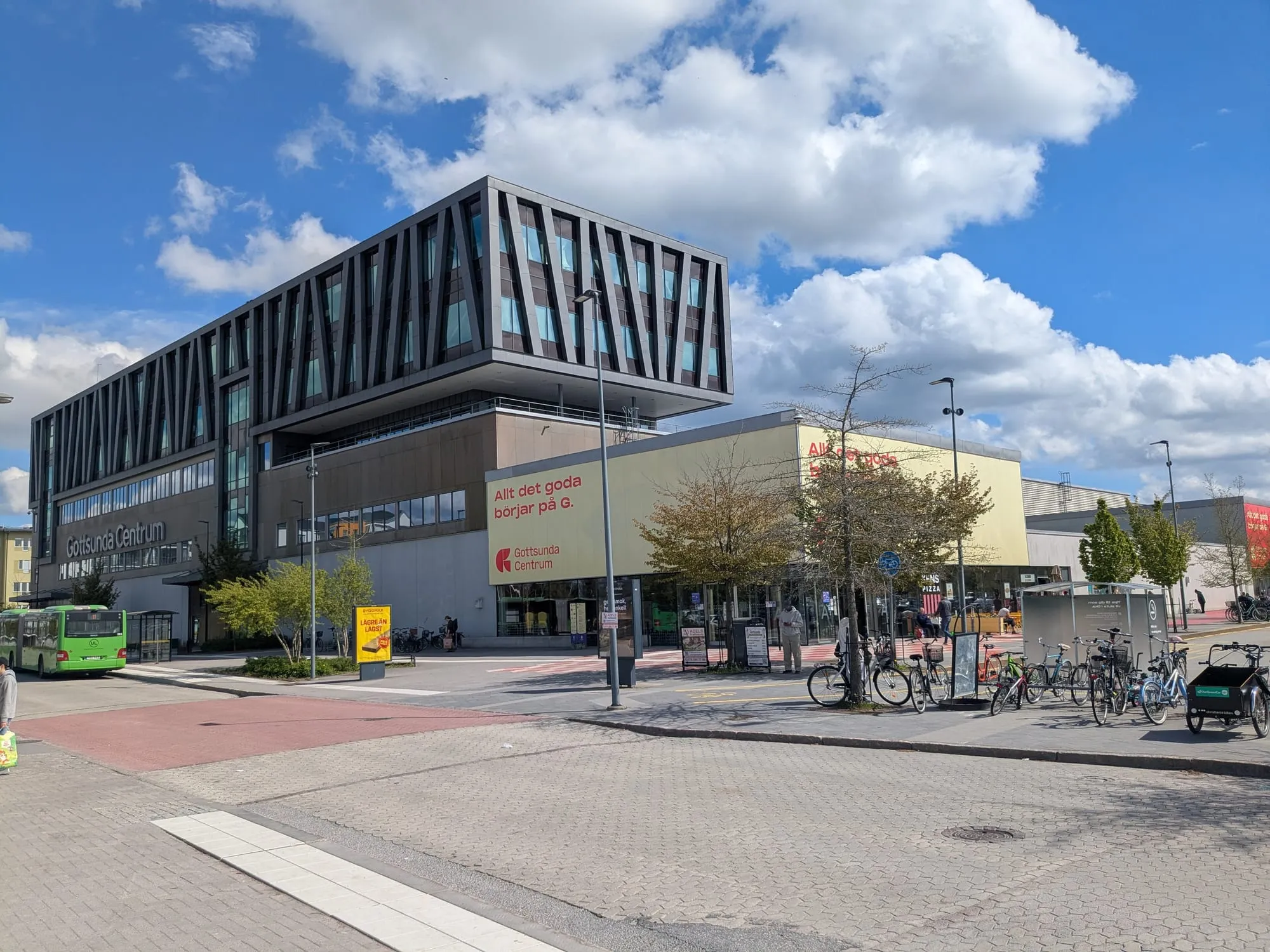
Here is an overview of how accommodation works for people who have applied for international protection (asylum) and are waiting for a decision, according to Migrationsverket (the Swedish Migration Agency). It is general information – your own situation is decided by Migrationsverket. The picture shows Gottsunda centrum in Uppsala, not one of Migrationsverket’s accommodations.
You are assigned a place
When you have applied, you are assigned a place in one of Migrationsverket’s accommodations. You cannot choose the accommodation or the town yourself, but must be prepared to be assigned a place wherever there is a vacancy at a reception and return centre (mottagnings- och återvändandecenter). You may also have to move during the waiting time to make room for someone else.
Shared room – but families get their own room
The accommodation often consists of a room shared with others. A family always gets its own room. Single people share a room with others of the same sex.
Special needs
If you are in a particularly vulnerable situation, you may be entitled to accommodation adapted to your needs. This may concern a disability, physical or mental ill health, being an LGBTQI person, being pregnant or elderly. Talk to your reception unit (mottagningsenhet) as soon as possible.
Rules and safety
Everyone in the accommodation should be able to feel safe. Everyone must show consideration for each other, regardless of religion, culture, sexual orientation and whether they are women or men. Alcohol and drugs are completely forbidden in Migrationsverket’s accommodations. Violence in all forms is forbidden and punishable under Swedish law and is reported to the police – both outside and within the family. Violence may not be used to bring up children.
If you are exposed to threats, violence or degrading treatment: call the police on 114 14 or, in immediate danger, 112. Also talk to the staff at the accommodation or your reception unit.
Costs
If you have income or assets of your own, you must pay for the accommodation, and for the food if it is included. If you have no money, you do not have to pay anything. Married couples and cohabiting partners are responsible for supporting their partner, and parents for their children. You are obliged to tell your reception unit if the family’s income changes – otherwise Migrationsverket can decide that you must pay afterwards. In some cases you do not have to pay for accommodation and food. Tell your reception unit about your finances and you will get help to work it out. The current fees are on Migrationsverket’s page.
If you live elsewhere
If you do not live in one of Migrationsverket’s accommodations, you generally receive no daily allowance (dagersättning) or special grant (särskilt bidrag). Exceptions can be made, for example if you live with your closest family who already live in Sweden, or if there are other exceptional reasons. Read more in the guide Daily allowance (dagersättning) and financial support for asylum seekers.
If you do not live at the place you have been assigned, you can be given a decision to report there three times a week, and Migrationsverket must always have your current contact details. Migrationsverket writes that your application may be withdrawn (återkallas) if you do not follow this.
Area restriction and attendance checks from 1 October 2026
As a main rule, you may not leave the county where your assigned accommodation is located. Everyone aged 16 or older who lives at a reception and return centre must also take part in attendance checks. You get more information when you arrive at the accommodation. Read more in the guide New rules for asylum seekers from 1 October 2026.
Share this guide
Important contacts
External organisation
Migrationsverket
Examines applications for asylum and residence permits and is responsible for housing and daily allowance for asylum seekers. For questions about your own case, log in to My page or use the contact options on the website.
- Phone
- Phone number and opening hours are on the official website.
- Official website
- migrationsverket.se/kontakta-oss.html
External organisation
Polisen och nödnummer
In immediate danger to life, a crime in progress or an accident: call 112. To report a crime or give a tip that is not urgent: call 114 14. Violence and threats are not allowed, including within the family.
- Official website
- polisen.se
Official sources
The sources were last checked on October 21, 2026. Rules can change – always check the official page.